
Is Pakistan safe for tourists?
An honest answer, region by region, with links to the government advisories rather than around them. The north is not the border areas, and the difference matters.
Karim Baig · 14 seasons guiding, Gulmit, Upper Hunza
Last updated 21 August 2026
You are going to read your own government's travel advice at some point. It is better that you read it here, with our commentary next to it, than that you find it after our glossy photographs and conclude we were hiding something.
Read these first
- The UK Foreign, Commonwealth & Development Office advice on Pakistan
- The US State Department travel advisory
- The Australian Government's Smartraveller advice
All three distinguish sharply between regions, and so should you. An advisory that warns against travel to Balochistan and the Afghan border districts is not saying anything about Hunza, and reading it as though it were is the commonest mistake foreign travellers make in either direction.
Where we take travellers
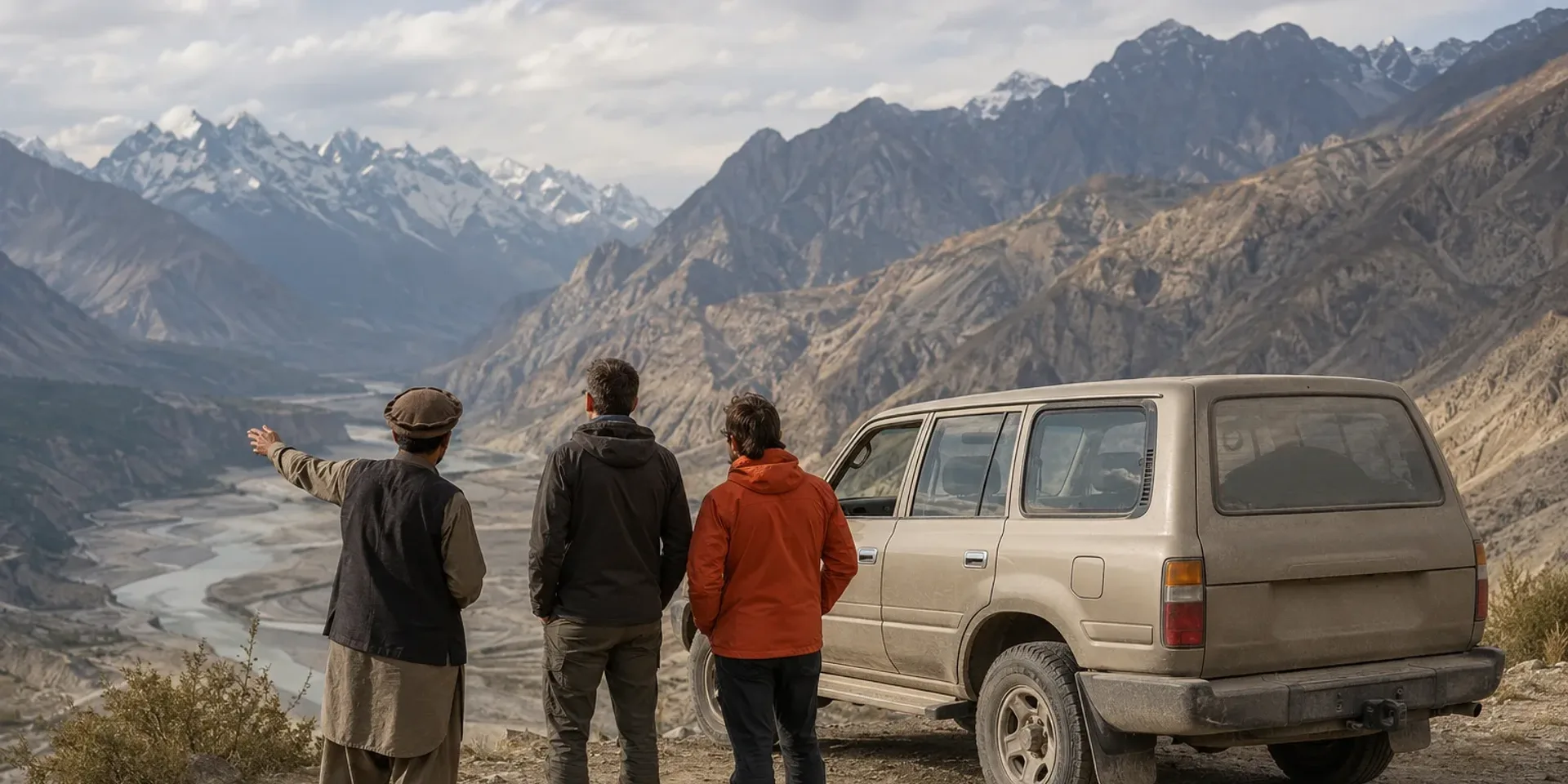
Gilgit-Baltistan — Hunza, Skardu, Deosai, Astore — has a serious tourism economy, a visible police presence, and a strong local culture of hospitality towards guests. Thousands of foreign travellers pass through it every season. In fourteen seasons of guiding, the incidents I have dealt with have been altitude sickness, a broken ankle and one stolen camera.
Swat, Chitral and the Kalash valleys are settled and calm, and have been for years.
Punjab and Sindh — Lahore, Multan, Karachi, Mohenjo-daro — are ordinary big-country travel: watch your bag in a crowd, take registered transport, and behave as you would in any large South Asian city.
Where we do not
We do not run trips to Balochistan, to the districts along the Afghan border, or to anywhere our own drivers tell us they would rather not go. If you ask us to and we say no, that is not caution for the sake of it.
What actually goes wrong
Being honest about the real risks is more useful than reassurance:
- Road accidents. By a wide margin the biggest danger. Mountain roads, long days, and drivers who take chances. We use our own drivers, we cap daily driving hours, and we do not travel these roads at night
- Altitude. Khunjerab at 4,693 m and Deosai at 4,000 m are reached by vehicle from much lower down, so people arrive at altitude without having earned it. We build acclimatisation in and we watch for it
- Weather and landslides. The Karakoram Highway closes. It is not usually dangerous, but it costs a day, which is why every itinerary we build has slack in it
- Stomach trouble. Unglamorous and by far the most likely thing to spoil a day
For women travelling alone
This deserves its own page rather than a paragraph, and it has one — see the solo female travel guide. The short version: it is very doable, it is different from travelling as a man, and pretending otherwise helps nobody.
Registration and permits
Foreign nationals need a No Objection Certificate for certain restricted zones. We handle those applications; the requirement is flagged on every destination page it applies to.
Insurance
Non-negotiable, and check the wording. Many standard policies exclude Pakistan while an advisory is in force, and almost all of them exclude trekking above 3,000 or 4,000 metres unless you buy specific cover. If your itinerary reaches Khunjerab, Deosai or any base camp, tell your insurer the altitude in writing.